


Our infant dental health tips are here to help you learn how to care for your baby’s teeth, gums and dental health from birth through toddlerhood.
Growing up cavity-free results from making critical decisions early in infancy regarding feeding patterns, diet and snacking behaviours, fluoride management and teeth cleaning routines.
Establish a ‘tooth brushing routine’ as soon as teeth erupt and stick to it every day. Brush after the first feeding of the day and after the last feeding before bed in the evening.
Try laying your child on a surface like a change table or counter that allows you to get close to the mouth.
Slide your free hand’s index finger between the teeth and the lip to let you see where you’re brushing.
You may need to gently ‘wrap’ your child in a towel to keep their arms from interfering.
Use a soft-bristled toothbrush with a small pea-sized amount of fluoride toothpaste, then push the toothpaste into the bristles so your child doesn’t lick it off.
Give your infant praise for helping so well.
Dental flossers are a useful and easy way to introduce flossing. Remember you’re establishing a routine that they’ll keep for the rest of their life.
Distract your infant by singing songs and talking to them, but above all, be gentle and take your time.
Don’t get frustrated! Remember, this is not punishment for you or your child.
Sticking to your toothbrushing routine will only make it easier for your child to see it as a normal and healthy part of life.
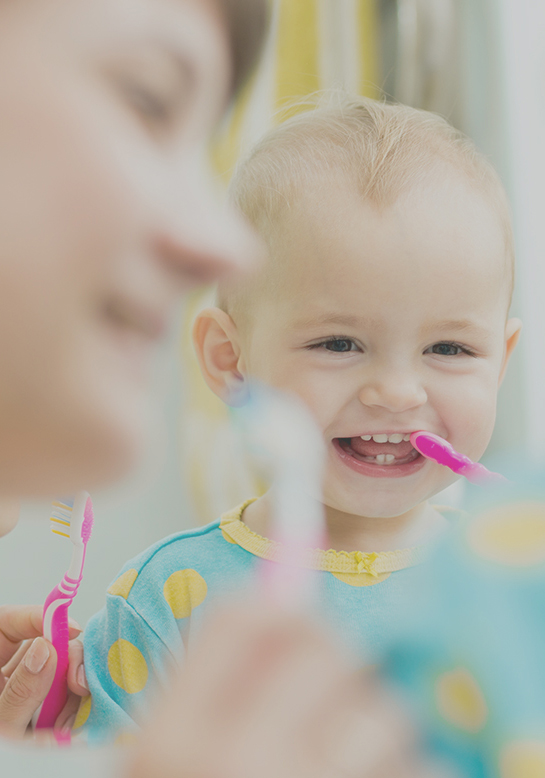
Establish a ‘tooth brushing routine’ as soon as teeth erupt and stick to it every day. Brush after the first feeding of the day and after the last feeding before bed in the evening.
Try laying your child on a surface like a change table or counter that allows you to get close to the mouth.
Slide your free hand’s index finger between the teeth and the lip to let you see where you’re brushing.
You may need to gently ‘wrap’ your child in a towel to keep their arms from interfering.
Use a soft-bristled toothbrush with a small pea-sized amount of fluoride toothpaste, then push the toothpaste into the bristles so your child doesn’t lick it off.
Give your infant praise for helping so well.
Dental flossers are a useful and easy way to introduce flossing. Remember you’re establishing a routine that they’ll keep for the rest of their life.
Distract your infant by singing songs and talking to them, but above all, be gentle and take your time.
Don’t get frustrated! Remember, this is not punishment for you or your child.
Sticking to your toothbrushing routine will only make it easier for your child to see it as a normal and healthy part of life.
Avoid frequent night-time feeding (including breast-feeding) after the first baby tooth erupts.
Bottle-fed infants should not be put to sleep with the bottle.
Try to wean child from the breast or bottle by 12 to 14 months of age (to discourage using this to ‘soothe’ a child).
Reduce your child’s sugar consumption frequency.
Limit your child’s daily fruit juice intake to 4-6 oz. (avoid giving pop or powdered drinks).
Children older than 6 months should be given fluoride every day. Use fluoride toothpaste twice per day.
Avoid frequent night-time feeding (including breast-feeding) after the first baby tooth erupts.
Bottle-fed infants should not be put to sleep with the bottle.
Try to wean child from the breast or bottle by 12 to 14 months of age (to discourage using this to ‘soothe’ a child).
Reduce your child’s sugar consumption frequency.
Limit your child’s daily fruit juice intake to 4-6 oz. (avoid giving pop or powdered drinks).
Children older than 6 months should be given fluoride every day. Use fluoride toothpaste twice per day.